

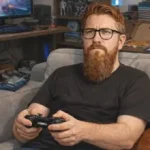
On her first cam stream, Scarlett didn’t show her face or speak. She typed everything. Now, talking with viewers and having a laugh are among her favorite parts of going live.
Known online as ScarStarX, the independent Stripchat performer says she first went live in September 2025 and later chose to focus exclusively on the platform. In her November interview with YNOT, she put her following at around 185,000. But her account of building that audience starts with something smaller: recognizing names and picking up conversations where they had left off.
Scarlett describes the atmosphere she wants as relaxed and playful, somewhere newcomers can join in without feeling they’ve walked into an inside joke. Looking back on her first year, she discussed becoming comfortable on camera, testing different start times, and learning to follow a chat that no longer moves at the pace it once did.

Scarlett, known online as ScarStarX. Photo credit: Scarlett (ScarStarX).
YNOT: You mentioned that you never expected streaming to become a full-time career. What first drew you to trying camming, and what was that specific moment when you thought, ‘This could be something for me’?
Scarlett: I’d just left a job I wasn’t happy in and wanted to try something different. I’d talked about giving camming a go because I thought it might suit my personality, but I wasn’t going into it thinking it would be my full-time job.
I realised pretty much straight away that it could be something for me. That first week went better than I’d expected, and seeing people come back after they’d already watched me once made me think, “Okay, I could actually do this.”
YNOT: You mentioned streaming exclusively on Stripchat. Is that a formal arrangement or simply your preferred platform? What led you to focus there—was it the audience, platform features, promotional support, or something else?
Scarlett: It’s my choice. Before I started camming, I did a bit of research into the different platforms, and Stripchat stood out because of how much traffic it got. It’s now the most visited of the major cam sites worldwide, based on website traffic estimates.
That was what caught my eye, but what made me stick with it was how much I enjoyed chatting with people there. Once I had regulars coming back, it made sense to put my energy into that room rather than split my time across different sites.
YNOT: What helped you become more comfortable on camera and find an approach that felt like your own?
Scarlett: On my very first stream, I didn’t show my face or say a word. I just typed everything. Which is quite funny now, because talking to people and having a laugh is one of my favourite parts of going live.
It happened gradually. The more I streamed, the less I worried about how I was supposed to act on camera. Once I started chatting and joking the way I normally would, it felt a lot more like me.
YNOT: Can you remember when viewers first began returning regularly? What did that change about the way you approached a stream?
Scarlett: I started recognising names quite early on. If someone had told me they had something coming up, I’d remember to ask how it went the next time I saw them. That changed how going live felt for me. I wasn’t starting from scratch every night. There were already conversations I could pick back up.
YNOT: Which choices seemed to help new viewers discover your room, and what made you think they were working?
Scarlett: Going live regularly (daily since around October 2025 with minimal breaks) seemed to make the biggest difference. As I settled into a more consistent schedule, I started seeing more and more unfamiliar names coming into the room. It wasn’t just one busy night here and there. I was seeing new people turn up regularly alongside the people I already knew.
YNOT: What do you do to make a first-time visitor feel welcome while keeping long-time regulars involved?
Scarlett: If someone new says hello, I’ll say hi and bring them into whatever we’re talking about. I don’t want it to feel like everyone knows each other and you’ve walked in halfway through an inside joke. With regulars, half the fun is that we can pick up where we left off.
YNOT: Tell us about one experiment with your streams that worked and one that didn’t. What did you change afterward?
Scarlett: I tried pushing my start time later, and at first it actually went worse. I could’ve written it off there, but I noticed I was reaching people from more places. The earlier streams had been mostly UK and European viewers, and the later ones were bringing in a more international mix.
I stuck with the later start and it ended up working better for me. My streams just go way better: I have a more lively chat, and goals are hit quicker. I’d also tried just staying on for longer, but adding hours didn’t necessarily help. Changing when I went live made more of a difference than changing how long I was on.
YNOT: As more people began tuning in, how did the conversations and atmosphere in your room change? How did you adapt?
Scarlett: Chat got a lot livelier. There’d be a few conversations happening at once, and I couldn’t always reply to every message like I could when the room was smaller. I got better at picking up on what people were talking about and bringing it back into the stream so more people could join in.
YNOT: How do you decide which audience suggestions fit your style and which to leave aside?
Scarlett: I like hearing people’s ideas, and if something sounds fun and feels like something I’d actually enjoy doing on stream, I’ll give it a go. If it’s not for me, that’s fine too. I don’t feel like I have to say yes just because someone asks.
YNOT: What part of preparing or running a stream takes more skill than you expected? How have you developed that skill?
Scarlett: Definitely multitasking. Reading chat while you’re halfway through saying something, keeping track of what’s happening on stream and somehow not forgetting what you were talking about is harder than it looks. I mostly got better by doing it over and over. Now it feels a lot more natural.
YNOT: Working independently, how do you decide what to learn or improve next? Are there resources or professional advice you have found especially useful?
Scarlett: Early on, I paid a lot of attention to the goals I set for the room. I’d look at how long each one took to reach and whether people seemed interested in it in the first place. That helped me see what was worth keeping and what I could change.
These days I keep the basic format pretty similar from one stream to the next. Most of what I’ve learned has come from trying things in my own room and giving them enough time to see how people respond. I wouldn’t change the whole show over one quiet night.
YNOT: What would you tell a new performer about building regular viewers that you wish you had understood at the start?
Scarlett: Give people a chance to get to know you. Show up regularly, talk to the people who are there, and don’t let a quiet stream convince you that you’re doing everything wrong. It takes time before someone who drops in once becomes someone you expect to see again.
YNOT: What would you like to develop next in your work on camera, and is there anything about your first year that we haven’t asked about?
Scarlett: I’d like to try a few new ways to get chat involved without changing the things people already like about the room. I love when a funny conversation takes the stream somewhere I hadn’t planned, so I’d like to make more room for that.
Mostly, I’m proud that I stuck with it. I went from being too nervous to say a word on my first stream to making this my full-time work. I definitely didn’t see that coming when I started.