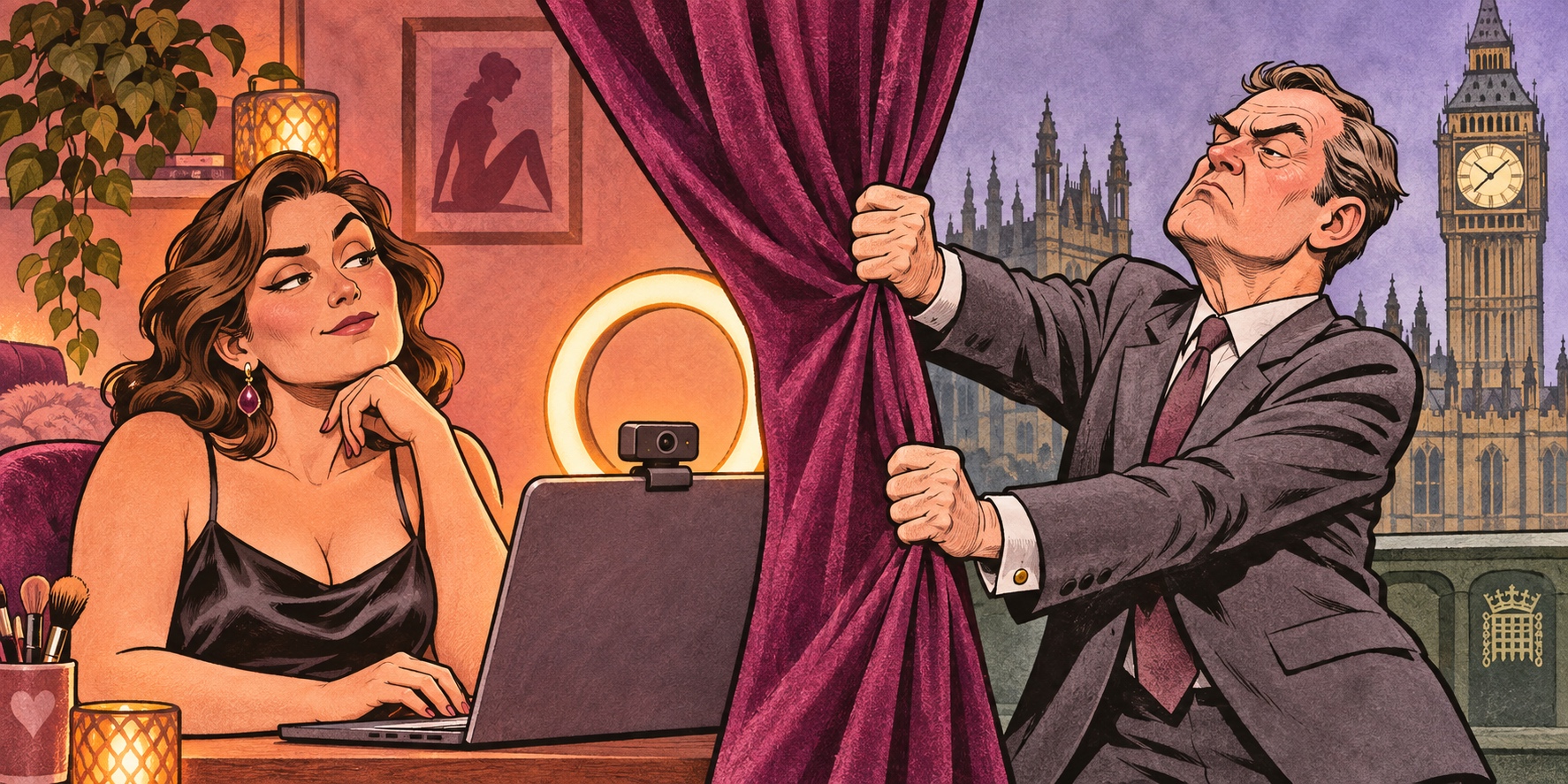

If you earn money camming in the UK or count on UK viewers, the latest headlines may leave you wondering whether anything has changed for your next show. The call for a ban comes from a November 10 report by the All-Party Parliamentary Group on Commercial Sexual Exploitation, an informal group of MPs and peers chaired by Labour MP Tracy Gilbert. As of November 20, YNOT Cam found no published bill or amendment to implement the ban, no public commitment from ministers to adopt it, and no start date. The report itself changes no law. The group’s report · UK Parliament’s guide to all-party groups
Who would the proposal affect?
The group wants to make it a criminal offence for platforms to enable or profit from commercial adult livestreams. As written, the recommendation appears broad enough to cover shows that adults freely choose to perform. The proposed offence targets the platform. For a solo performer, the immediate business risk if a ban became law would be losing access to live features or paying viewers. A separate proposed offence would target people who facilitate or profit from someone else’s live performance. How that might apply to studios, managers, or collaborators would depend on the wording of any bill. The report’s recommendations
The report also wants performers to be able to withdraw consent for platforms to continue distributing and making money from prerecorded material, including recordings of cam shows. Another recommendation would give police and designated regulators access to hosted and streamed content for investigations and enforcement, including material behind paywalls. The report leaves open what privacy safeguards would govern that access. The report’s consent and access recommendations
Why are lawmakers calling for a ban?
The group argues that platforms can’t screen a live show in advance and that real-time requests and payments can pressure performers to cross their boundaries. It also points to coercion by people off camera, recordings shared without consent, exposure of performers’ identities, and child sexual exploitation. Human Rights Watch documented coercion and other abuses in Colombian webcam studios. Its investigation shows how abuse can happen in a studio setting. How common those abuses are among independent UK performers remains an open question. The inquiry’s findings · Human Rights Watch’s investigation
Alison Boden, executive director of the industry trade group Free Speech Coalition, told AVN that the report gives too little weight to performers’ choices and perspectives. Researchers at Oxford’s Fairwork project documented harassment, stalking, and inadequate platform support across four sites, including Streamate and Chaturbate. Their work points to changes platforms could make now, including clearer contracts and better support when performers report abuse. AVN’s interview with Boden · Oxford’s Fairwork Sex Work Project
What’s already changed, and what should performers watch for?
Separate restrictions on certain types of recorded adult content took effect in England and Wales on November 6. UK creator Sophia Truee told 404 Media that Clips4Sale flagged 392 of her 506 videos as needing edits without specifying what to change. The platform described its UK restrictions as precautionary. Her experience shows how quickly a platform’s response to a rule change can affect a creator’s catalog. 404 Media’s reporting · Ministry of Justice guidance
There’s also a deadline worth marking. The Crime and Policing Act requires ministers to report by late April 2027 on how platforms verify the age and consent of people who appear in adult content. It gives ministers power to propose new rules in that area. Ofcom’s existing age checks for viewers serve a separate purpose. Crime and Policing Act, sections 108–110 · Ofcom’s guidance
For the camming proposal itself, watch for a minister to publicly back it or for a bill or amendment to spell it out. The government has committed to a broader review of prostitution laws. Until there’s legislative text, questions about private shows, free streams supported by tips, and overseas platforms serving UK viewers remain open. Performers have reason to follow the debate, and the November report gives them no deadline to change how or where they stream. Government action plan · UK Parliament’s bills register