
A California creator who built her OnlyFans business around fetish content was sentenced Monday to four years in custody after a paid in-person session ended in the death of her client — a case that has moved through the courts for three years and now sits at the intersection of creator safety, legal liability, and the real-world risks that can come with taking fan relationships off-platform.
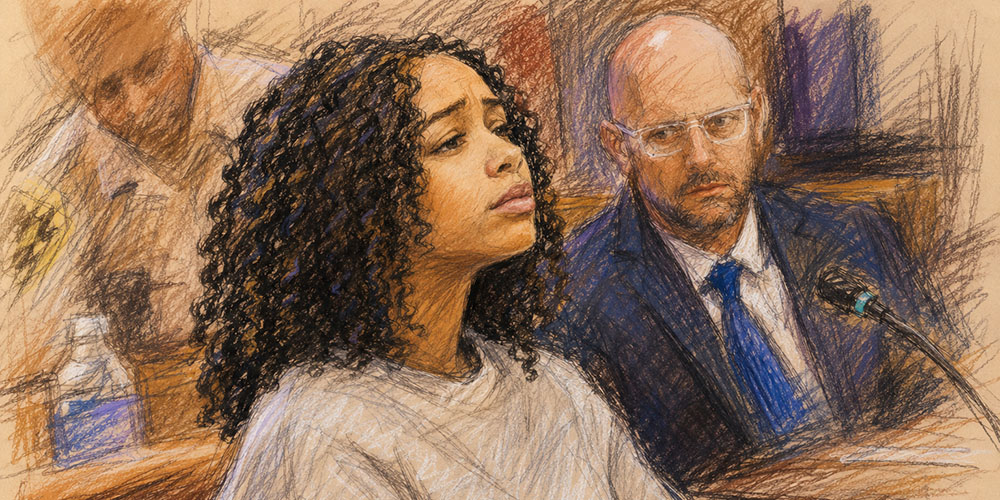
Michaela Rylaarsdam, 32, of San Bernardino County, pleaded guilty last month to one count of involuntary manslaughter in the 2023 death of Michael Dale, 55, of Escondido, California. She was sentenced Monday in San Diego Superior Court by Judge Brad Weinreb, who accepted the terms of the plea agreement. According to the San Diego Union-Tribune, the four-year sentence will be served in county jail rather than state prison. Her attorney, Daniel Cohen, told the court that Rylaarsdam has already been in custody since February 2025 and will likely serve a little more than a year of remaining time.
Rylaarsdam had originally been charged with second-degree murder, which carried a potential sentence of 25 years to life. The San Diego District Attorney’s office said it weighed the totality of the evidence and consulted with Dale’s family before agreeing to the manslaughter plea. “The victim’s family was satisfied with the resolution,” the DA’s office said in a statement.
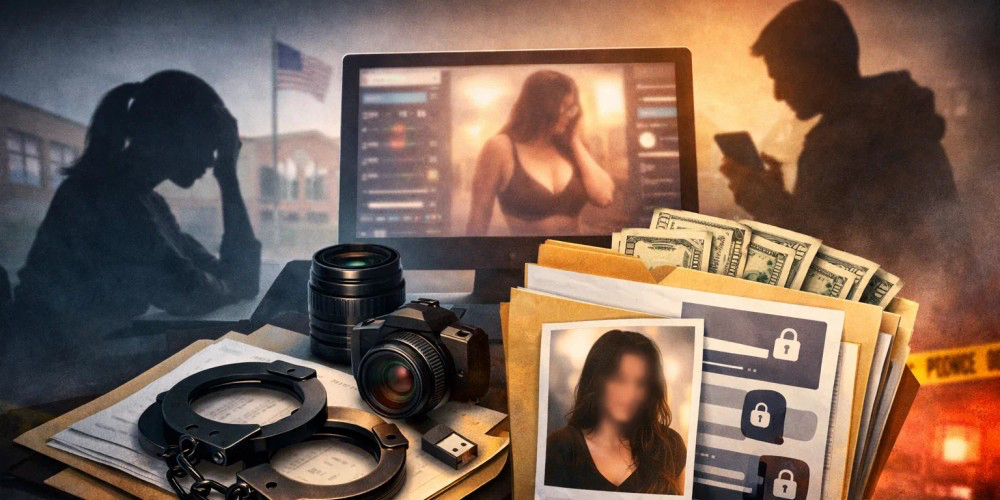
The facts of the case, as established through court filings, preliminary hearing testimony, and statements from prosecutors, are serious and specific. Dale found Rylaarsdam through an online advertising directory used for adult services in March 2023, according to Deputy District Attorney David Jarman. The two communicated via WhatsApp, where Rylaarsdam charged him for text exchanges. Over several weeks, Dale paid Rylaarsdam more than $11,000. On April 17, 2023, Rylaarsdam traveled to Dale’s Escondido home for a bondage session she intended to record for her OnlyFans account. No sex act occurred between them, Jarman said.
According to prosecutors and court documents, Dale — who had underlying health conditions including high blood pressure and diabetes — ended up with a plastic bag over his head, duct tape around his mouth, and his wrists bound. Prosecutors said he had four layers of material on his head at one point. At some point during the encounter, according to Court TV’s reporting, a roommate of Dale’s heard him say, “Can we stop? I’ll pay you more money to stop.” Rylaarsdam ultimately called 911 and was performing CPR when the first officer arrived. Dale was taken to a hospital and died the following day. Prosecutors attributed his death to oxygen deprivation.
Videos recovered from Rylaarsdam’s phone were presented at her preliminary hearing. According to the Los Angeles Times, one video showed Rylaarsdam continuing to record content while Dale lay unresponsive, minutes before the 911 call was made. Prosecutors also said she shared photos and videos from the encounter with her husband in real time, who encouraged her to continue, according to Court TV. Her husband and uncle were present in the courtroom at sentencing.
In an emotional statement, Rylaarsdam addressed Dale’s family directly, though they were not in the courtroom. “I’m sorry is not enough,” she said, according to Courthouse News. “The desire to go back and undo this would be at the top.” Her attorney described her as a bright, intelligent woman who ran her OnlyFans business to support her family and said she had been in therapy since the incident. Judge Weinreb acknowledged there was no intent to kill but was direct about the severity of what happened. “The actions were so reckless that death was almost certain,” he said from the bench.
Creator Safety And Reputation Risk
This case is not representative of how most creators work — but it does surface a specific and serious category of risk that is worth understanding clearly: what happens when a creator takes an in-person paid session with a client they met through an online platform or directory.
Rylaarsdam did not meet Dale through OnlyFans itself. According to prosecutors, they connected through a separate adult advertising directory and moved their communication to WhatsApp. The in-person session was then recorded for her OnlyFans content. That chain — platform to off-platform directory to private messaging to in-person meeting — is a path some creators take, and it carries risks that no platform’s terms of service or safety team can reach.
The legal exposure here was extreme. Rylaarsdam was initially charged with second-degree murder. Even after a plea deal reduced the charge to involuntary manslaughter, she received a four-year sentence and has been incarcerated since early 2025. Her defense was that the encounter was consensual and accidental. The prosecution’s position, as stated by Deputy DA Jarman, was that “she knew the risk she was engaging in and went for it anyway.”
For creators who do in-person work — whether that is custom content sessions, domination or fetish services, or other paid physical encounters — the legal and safety stakes of that work are categorically different from producing digital content. Consent, safety protocols, physical risk assessment, and awareness of a client’s health status are not just ethical considerations; they can become criminal ones.
The broader reputational risk for the creator community here is more diffuse. Cases like this tend to generate coverage that conflates all adult content creation with high-risk physical encounters, which is not accurate. Most creators work entirely online, and the risks they navigate — harassment, doxxing, payment processor instability, platform policy changes — are real but structurally different from what happened in this case. Creators who work exclusively in digital formats should not read this story as directly applicable to their day-to-day operations, but it is useful context for understanding how quickly legal exposure can escalate when in-person services are involved.
Platform Policy Impact
This case is unlikely to trigger immediate policy changes at major subscription platforms, but it is worth watching for a few reasons.
First, the connection to OnlyFans in this case is primarily reputational rather than operational. Rylaarsdam used the platform to publish content and build her subscriber base, but the fatal encounter itself was arranged through a separate adult directory and conducted off-platform. OnlyFans was not named as a party in the case and has not issued a public statement in response to the sentencing, based on available reporting.
That said, high-profile criminal cases involving creators on named platforms have historically created pressure — from payment processors, from legislators, and from the press — for those platforms to demonstrate tighter controls. The 2021 period when major platforms faced payment processor ultimatums over content moderation is the clearest recent example of how quickly external pressure can translate into policy changes that affect all creators, not just those involved in any specific incident.
If this case draws sustained legislative or regulatory attention — particularly around in-person services advertised or funded through subscription platforms — creators and platform operators should watch for proposals that would expand liability or require new verification and disclosure requirements. That has not happened yet based on current reporting, and it would require a meaningful shift in the political or regulatory environment before it becomes actionable for most creators.
For now, the more immediate platform-level consideration is that payment processors and compliance teams at subscription platforms pay attention to criminal cases involving their named platforms. Creators who offer services that blur the line between digital content and in-person paid encounters may find themselves subject to closer review if platforms decide to clarify or tighten their terms around off-platform activity that is connected to on-platform monetization.
The sentencing closed the criminal phase of this case. Rylaarsdam is expected to serve the remainder of her sentence in county jail, with credit for time already served since February 2025. What the case leaves open — for creators, platforms, and the legal system — is a clearer framework for how criminal liability attaches when content creation moves from a screen into a room with a paying client. That question is not new, but this case put it in front of a judge, a jury pool, and a national press cycle in a way that is likely to shape how creators, attorneys, and platform compliance teams think about in-person services for some time.